

What changes when AI keeps working after you close the chat
Dots offers a way to delegate work that can continue between conversations. For a team, a useful starting point needs a bounded goal, clear permissions, and a result people can review.
Delegation in five slides
Explore the ideas in this note. Swipe through the slides or use the arrows, and download each PNG.
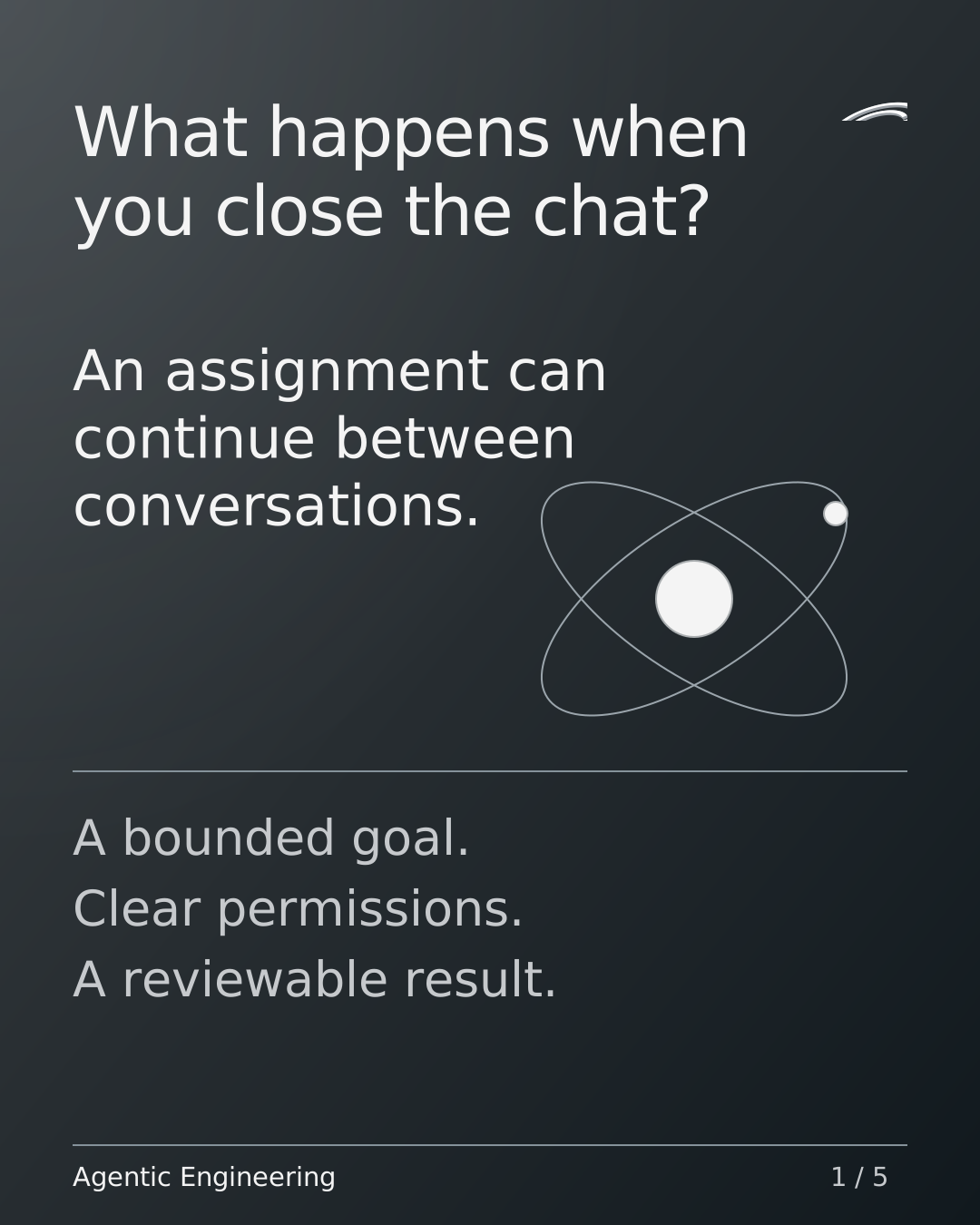
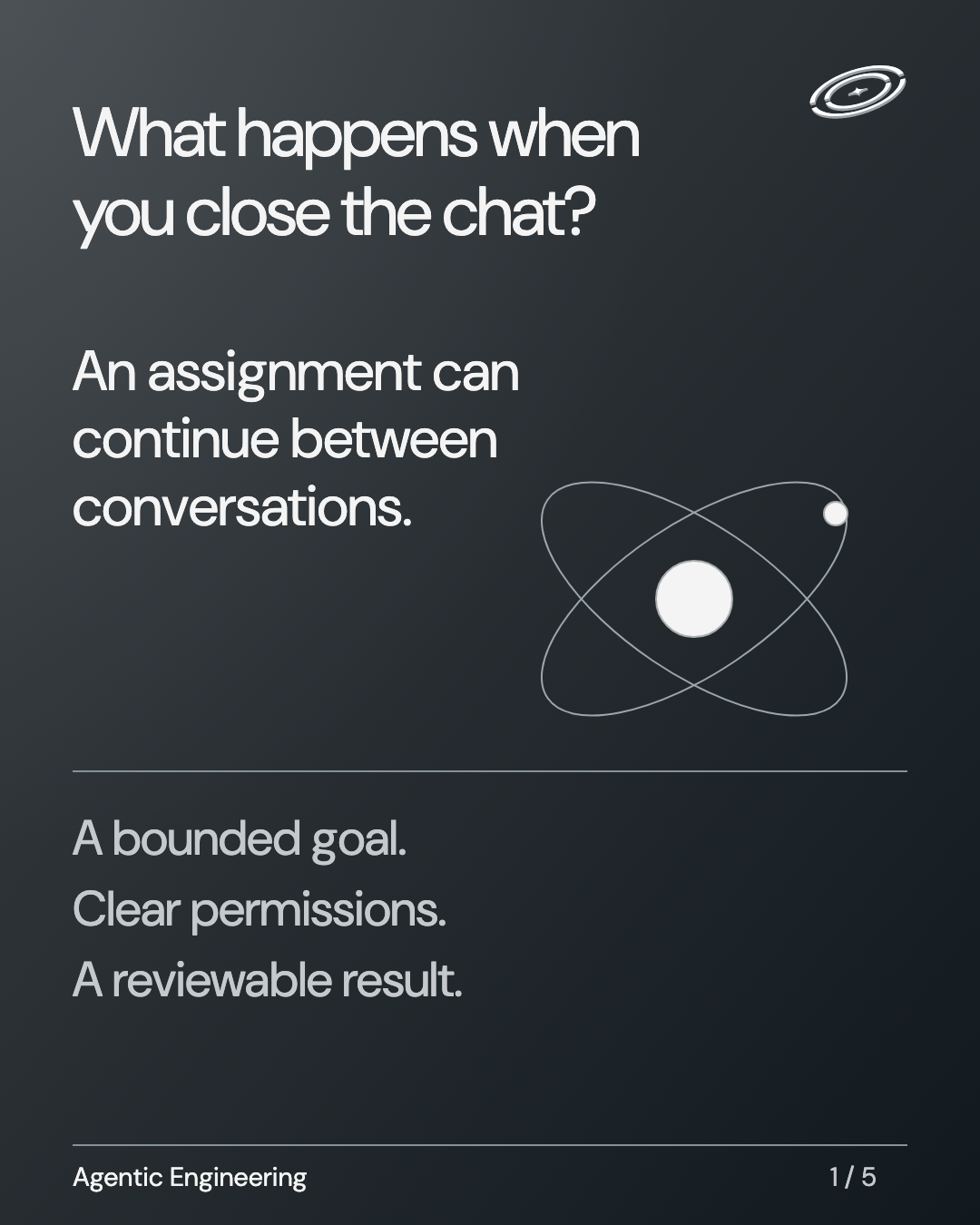
1. What happens when you close the chat
Closing the chat does not define the end of the assignment. Start with a bounded task, check dots availability and decide how to review the result.
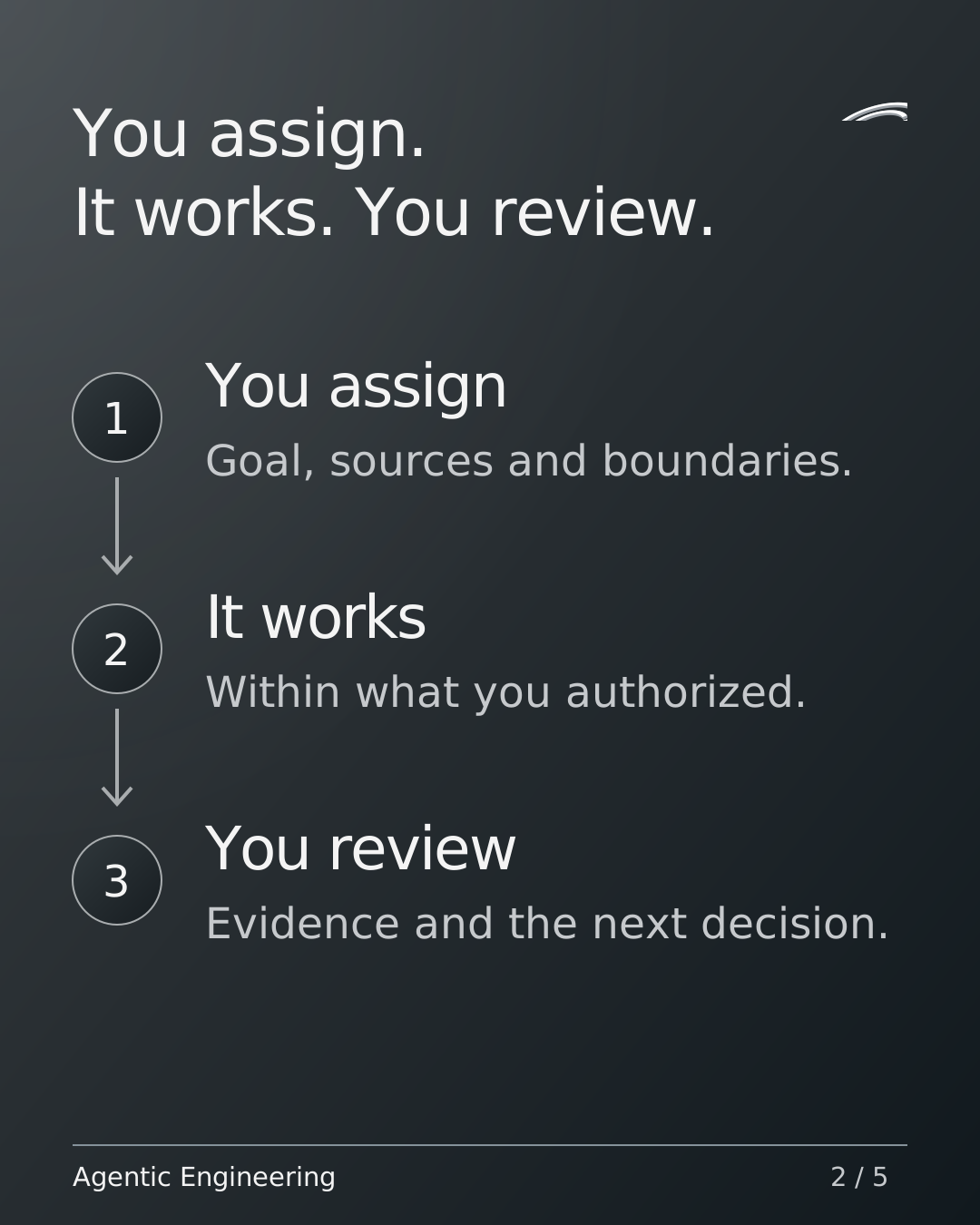
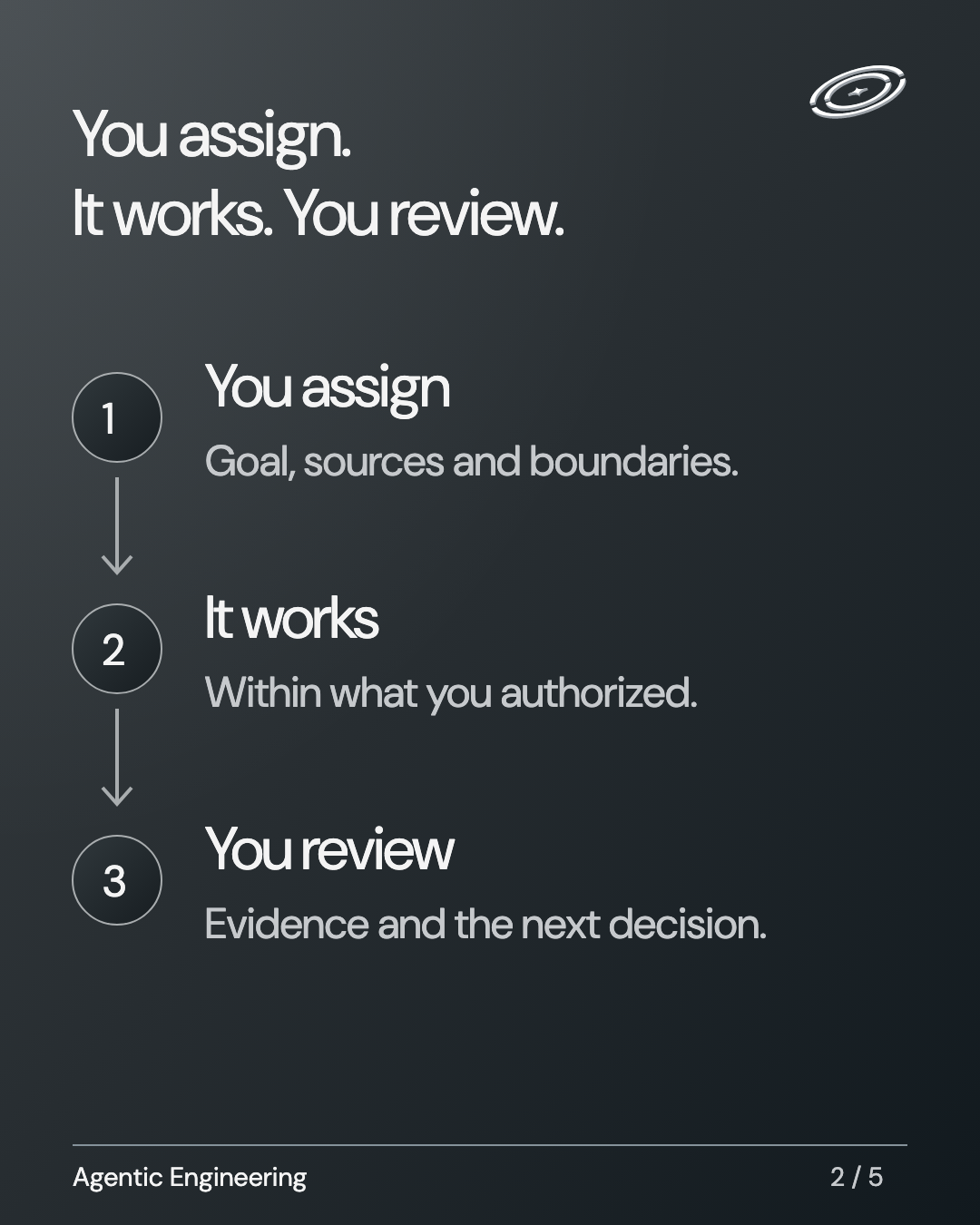
2. You assign → it works → you review
Continuity needs a recognizable assignment and human review. Actions that require approval should be explicit from the start.
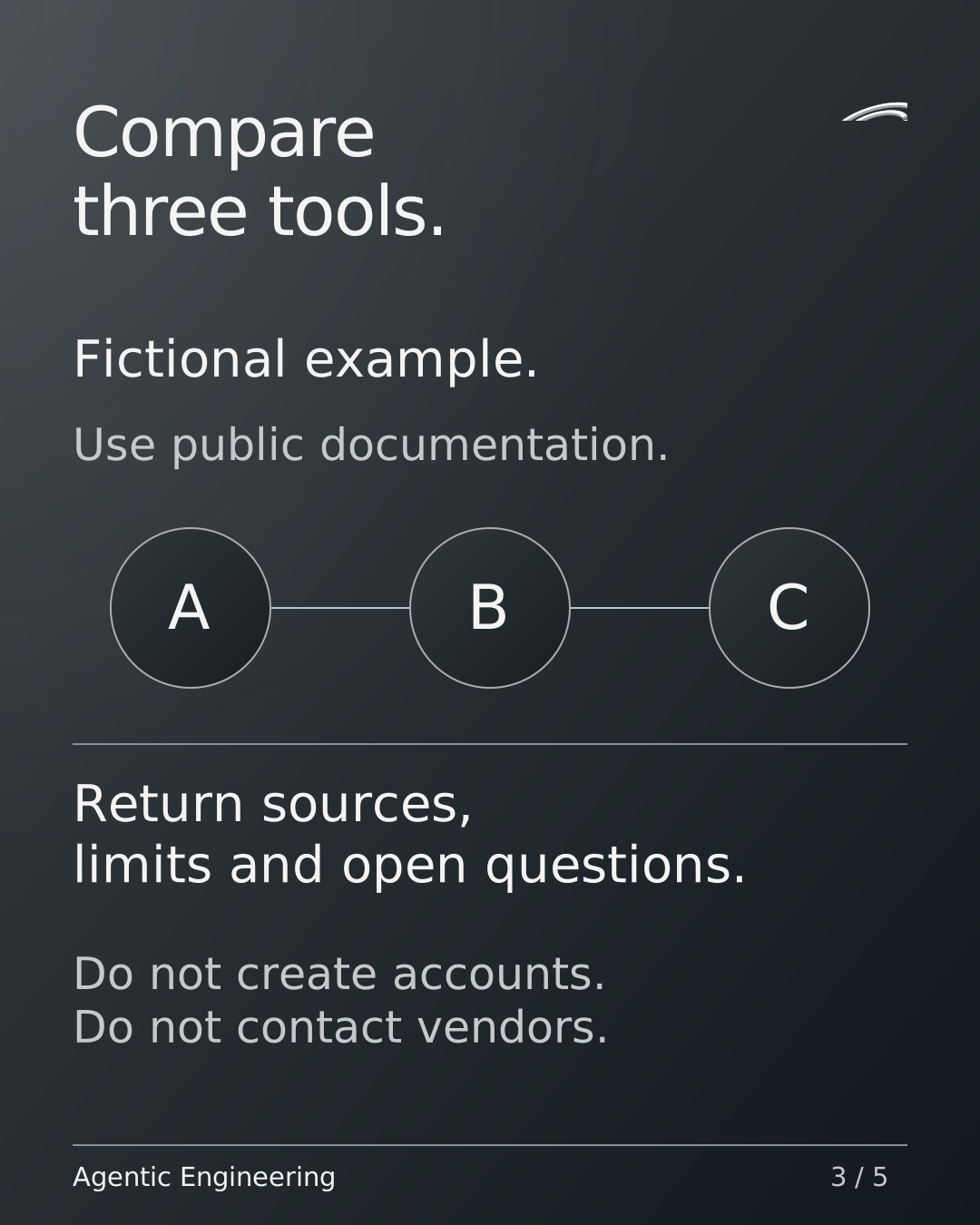
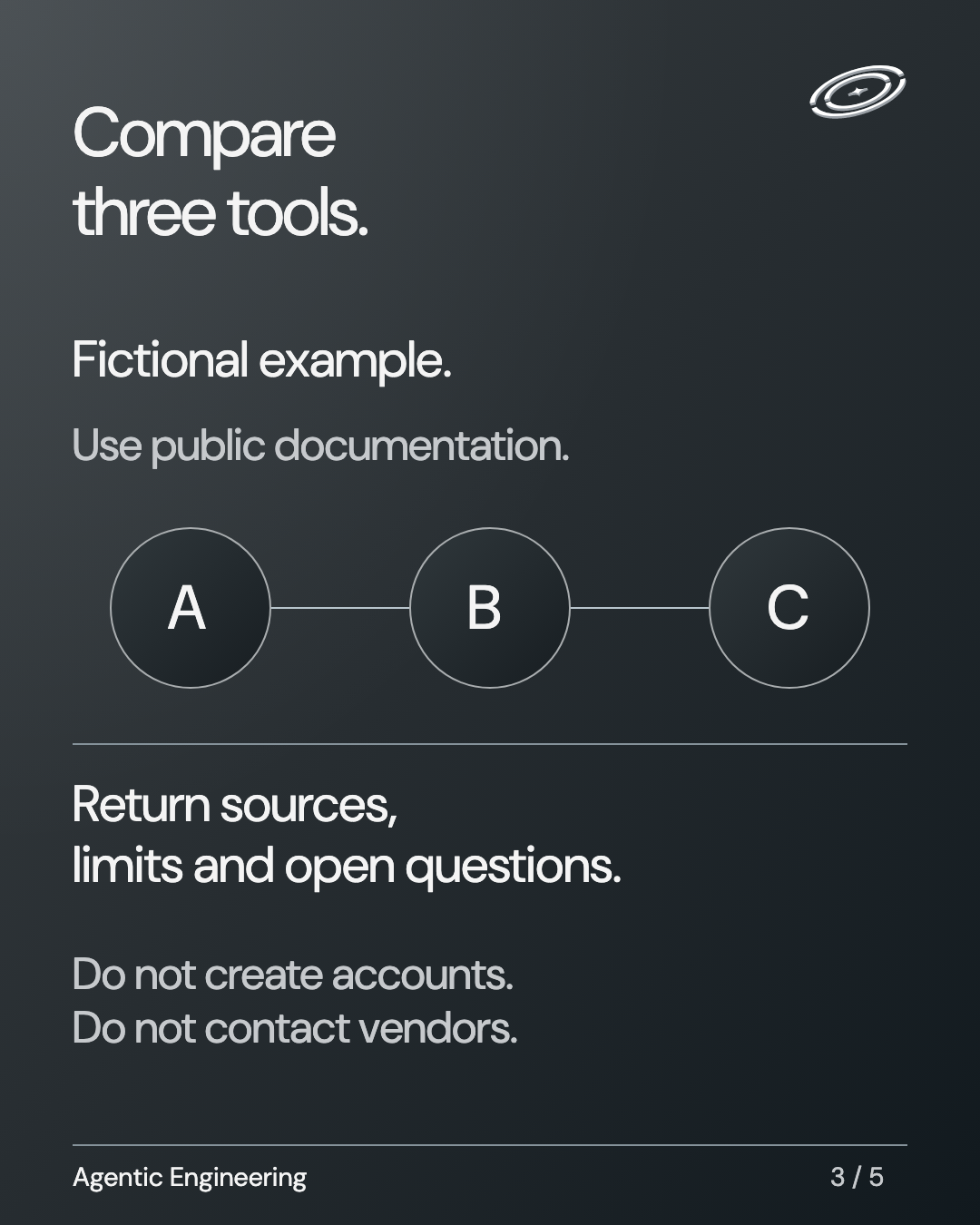
3. Compare three tools
A fictional example to explain the method; it represents neither an implementation nor tested dots results. The comparison uses public documentation only.
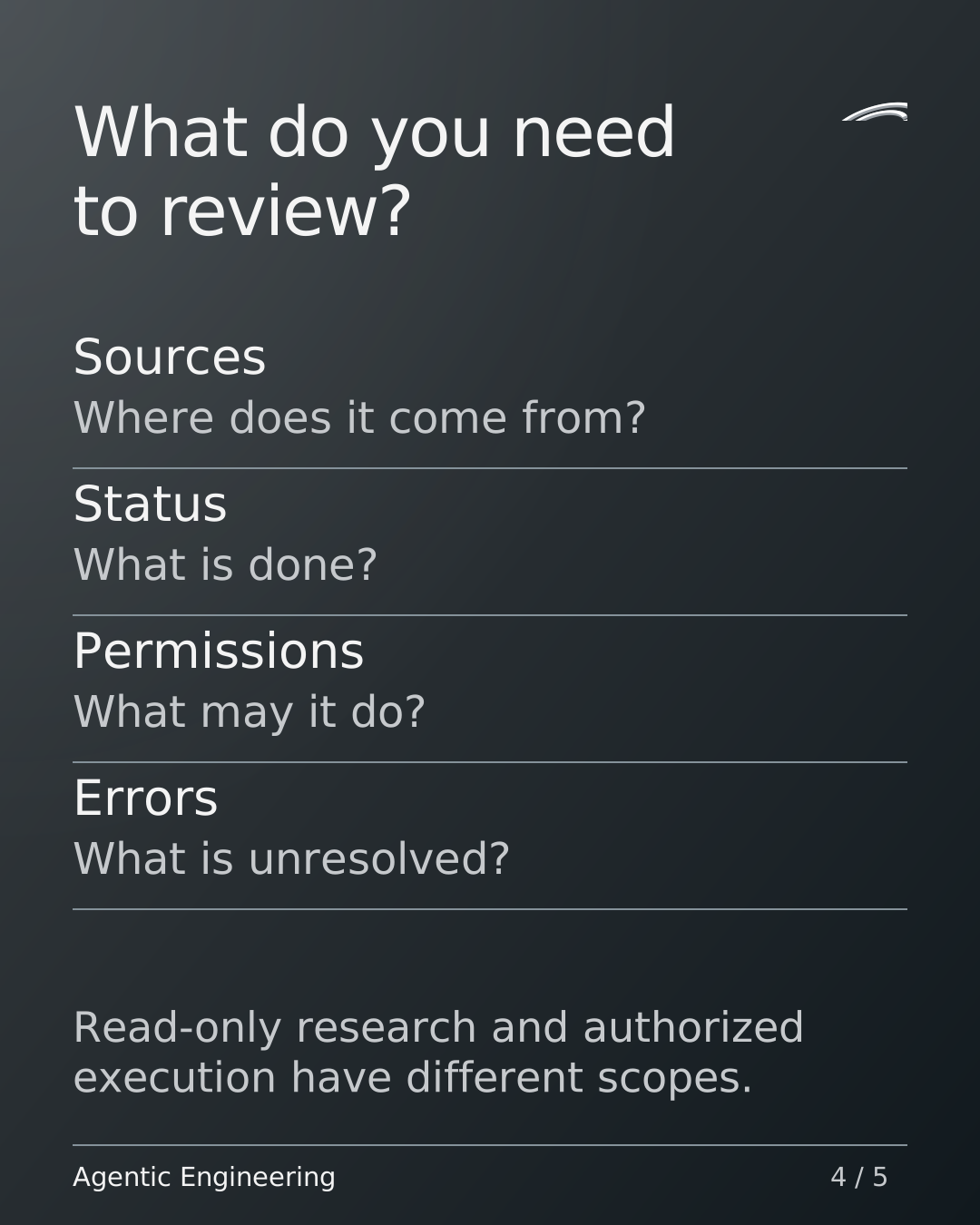
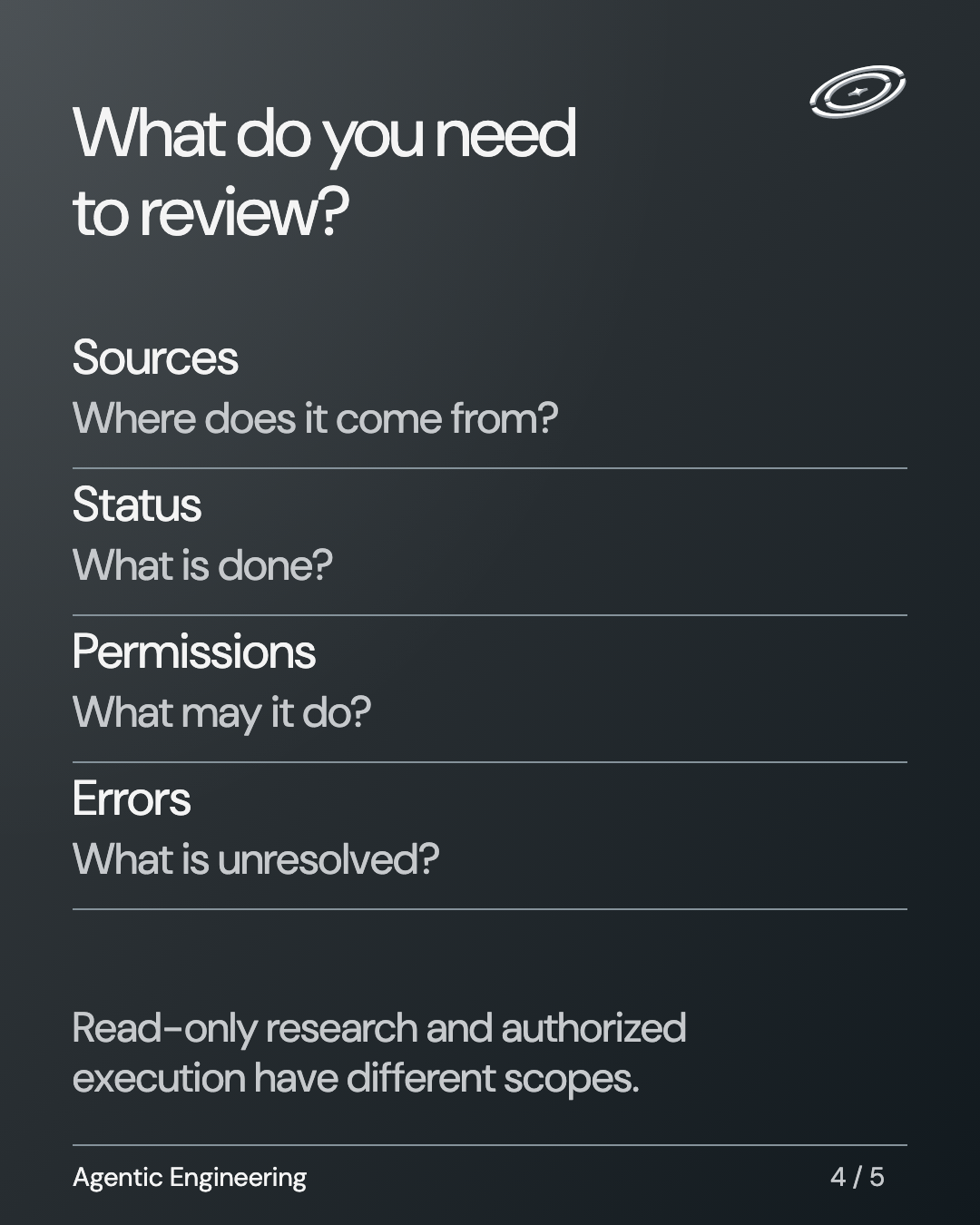
4. What you need to review
Ask for inspectable evidence. Distinguish read-only proactive research from delegated execution that you have authorized.
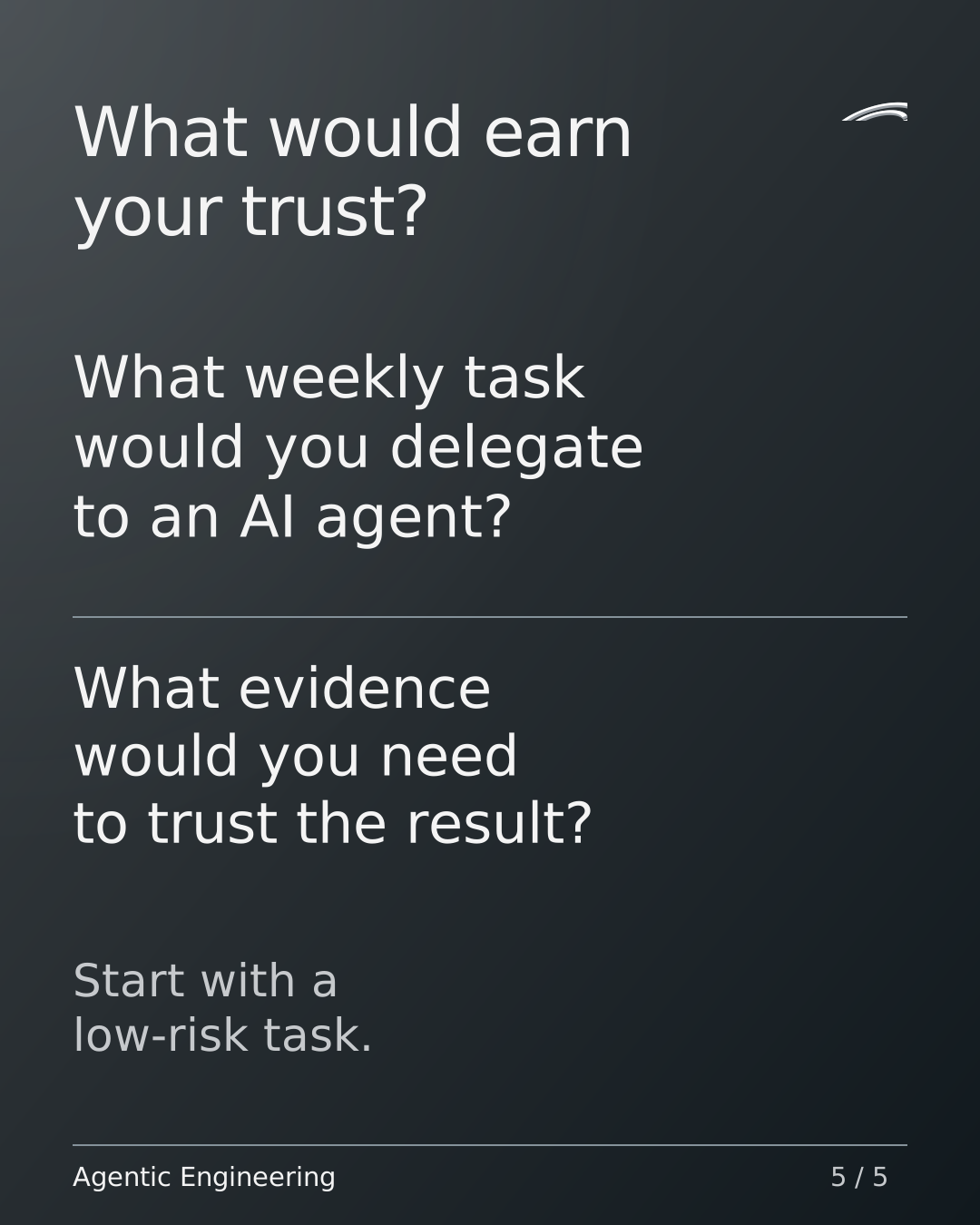
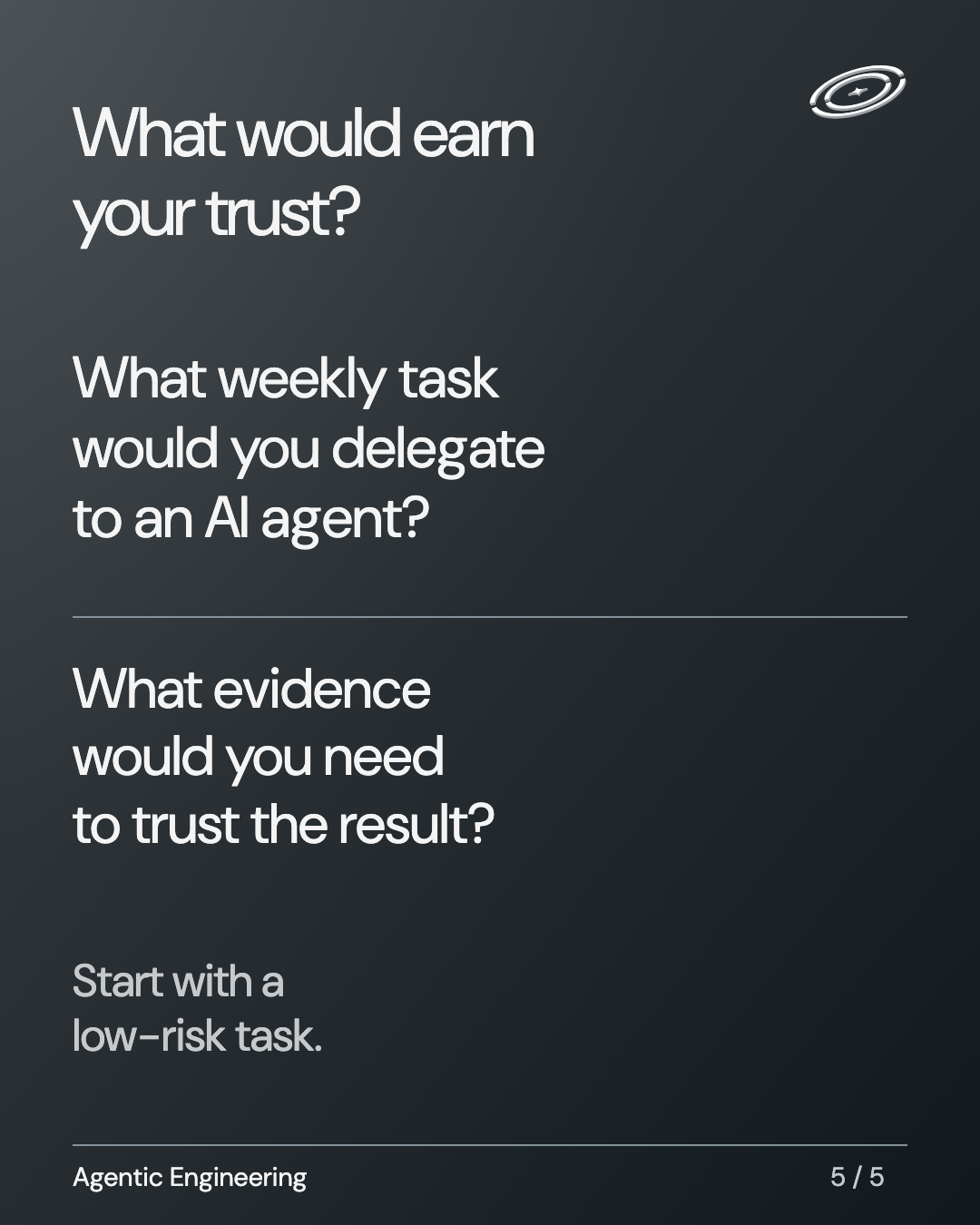
5. What would earn your trust
Choose a low-risk weekly task and define the result you would need to see before expanding its responsibility.
01 / Context
The work that can move forward
What changes when AI keeps working after you close the chat?
For someone running a business or coordinating a team, the question is practical: which part of a task can move forward while you attend to something else, and what do you need to check when you return? Research, a comparison, or a draft can be good starting points. The usefulness of that delegation is assessed through the result and the work it took to review it.
02 / Announcement
What OpenAI announced
On September 29, 2026, OpenAI introduced dots as agents that can keep work moving between conversations, with their own cloud computer and the apps the user connects. The announcement describes goals that continue to advance and results that come back for review.
Access is rolling out gradually. The official help distinguishes Pro availability by market, Business Premium, and an Enterprise beta enabled by an administrator. Before planning a trial, check availability in the account and the connections it requires.
One possible application for a business is to design delegation with continuity: define the goal, let work progress within its boundaries, and return to review what it produced. That possibility still needs testing in each team's actual work.
03 / Brief
How to define a useful assignment
A request such as “help me with operations” leaves too many decisions open. Start with a task whose result you can recognize and review. For example, compare options for a specific need or prepare a summary from permitted documents.
Before delegating it, write down five things:
The goal: which question you want to answer
The sources: where it may look and what information it may use
The deliverable: what it should return
The limits: which actions it may take and which need approval
The completion criterion: what it would need to show for the work to be considered finished
This also helps identify a poorly chosen task. If you cannot define how to review the result, reduce the scope before giving it more responsibility.
04 / Fictional example
A fictional example of delegation
Imagine a team that wants to compare three tools for coordinating its weekly work. This is a fictional example to explain the method; it does not describe an Agentic Engineering implementation or a tested result with dots.
The assignment could be: “Compare three tools for a small team that needs to assign tasks and review progress. Use the providers' public documentation. Return a comparison with links, the limits of the plan you examined, and outstanding questions. Do not create accounts or contact the providers.”
The team would have a concrete review point: check whether the relevant features are documented, whether the conditions still apply, and whether the comparison addresses its need. If the focus drifts toward features that do not matter, the team can correct it. If information is missing, that absence should remain visible.
The expected result would be a comparison that helps the team decide. To know whether it achieved that, someone would need to read it, open its sources, and check it against the requirements. In this example, the choice of tool remains with the team.
05 / Background work
What working in the background means
Two situations should be distinguished. A task you have already assigned can continue within its authorization. OpenAI also describes proactive research that looks for useful information in permitted connected sources. The tools used for that research are read-only: they cannot send messages to other people, change app content, or control the browser or computer. Subsequent actions follow the usual rules and checks.
Closing the chat does not, by itself, expand the assignment. Authorization remains tied to what you requested. The official documentation also says that the rules continue to apply to delegated work and work that continues in the background. Consequential work requires review, and some sensitive actions need approval or must be completed by the user.
06 / Review
How to review what it returns
A simple review can start with three questions:
Permissions and scope: did it have access to the necessary sources and stay within the assignment? If a connection failed or a document was left out, did it say so?
Evidence: can you open the sources and check the important claims? Does it distinguish observations from an estimate or a proposal?
Human decision: what still needs verification, and who decides the next step?
Ask the deliverable to make clear what was completed, what remains pending, and why. A list of activities does not prove that the goal was met. In the fictional comparison, finding three websites would be progress; checking the requirements and limitations would let the team assess the result.
In a first trial, also review how much correction work the team needed to do. That observation helps decide whether to repeat the assignment, adjust the instructions, or maintain closer review.
07 / Evaluation
Optional technical depth
If the team has technical support, a bounded trial can record the inputs used, the available tools, the permissions granted, and the actions observed. Define acceptance criteria before starting and preserve enough evidence to check the result.
These are different states: having a tool available, attempting an action, receiving a response, and verifying that the expected change happened. Separating them helps locate errors and avoids treating a task as finished simply because the process kept running. This is a proposed evaluation criterion, not a description of dots' internal architecture.
08 / First step
A first step for your team
Choose a low-risk weekly task and write down the result you would need to see to consider it useful. Start with research or preparing a draft, limit the sources, and define who will review it. After trying it, compare what you received with that criterion.
Which weekly task would you delegate to an AI agent, and what evidence would you need to trust the result? That is a useful question for starting to explore these tools with your team.
09 / En español
Delegar también exige saber cómo revisar
Dots plantea trabajo que continúa entre conversaciones. El ejemplo de esta nota es ficticio y no describe una implementación ni resultados probados con dots.
- Define el objetivo, las fuentes, el entregable, los límites y el criterio de cierre.
- Distingue investigación proactiva de solo lectura y ejecución delegada autorizada.
- Revisa permisos, evidencia y la siguiente decisión humana.
10 / Source trail
Primary, fresh, inspectable.
Product details move quickly. These sources were checked for this issue on October 5, 2026. Re-verify before changing production policy.
- 01Introducing dotsOpenAIOfficial announcement, September 29, 2026. Consulted October 5, 2026.
- 02How we build safety, security, and privacy into dotsOpenAIOfficial publication, September 29, 2026: read-only proactive research and boundaries on actions. Consulted October 5, 2026.
- 03Getting started with your dotOpenAI Help CenterOfficial help on availability and getting started. Consulted October 5, 2026.
- 04Dots privacy, security, and safety FAQsOpenAI Help CenterOfficial help on permissions, background work, and approvals. Consulted October 5, 2026.
Weekly signal · biweekly email
Field-tested ideas. No content treadmill.
One substantial note when we have something worth showing: systems, receipts, prompts, and what failed. Confirm by email. Unsubscribe whenever you like.